The Two-Year Itch

Brianna Paton • March 26, 2018

Working as a talent consultant and meeting many ambitious young people every day, you do tend to notice a few trends. One I would like to contemplate a little more today. 


Me: So why do you want to leave your current role? 


Candidate: Well it’s been over 2 years and I just think I need a change 


Why is it that we think we need change to continue growing? 


Wouldn’t moving up in your current role also be change, building on what you have spent two years working on to leverage a pay-rise or a promotion? As an employer you would think so, as an employee unfortunately not the case. And yes, you guessed it - this is generational so it’s only going to get worse!


“Today, the average person changes jobs ten to fifteen times (with an average of 12 job changes) during his or her career” 


So how do you build a business if your people are wired to want to leave in two years’ time, for no other reason than a change?


The answer: Be the change!


Creating a dynamic work environment tailored to the individual’s stage of life is a way to align the business and their personal/professional goals, therefore keeping them motivated and engaged. 


Think of it as a relationship, they need to change and develop with honest communication over time to continue to grow.


One of my favourite agencies, not going to name name’s but it’s a boutique events agency. Has the highest staff retention I’ve ever seen, and the staff absolutely live for the agency. 


So, what's their secret?


By treating everyone as exactly that - an individual!


When their Events Manager (who had been there for two years’) boyfriend got transferred to Melbourne, did they say well that’s sad off you go – no! They sent her to open the Melbourne office, she was so grateful for their loyalty and open mindedness she worked her arse off to build it to the success that it is today.


When their Account Director fell pregnant did they start recruiting for her mat leave and moving her off the business? No – they hired her a PA/Nanny so she could work from home and be in the office when needed.


When their junior wanted to go back to study one day a week did they bat an eye? No because by her bettering her education she would in turn bring a wealth of knowledge to the agency.


Do you see a trend here? 


People are ever evolving and growing. The trick is creating a business that grows and evolves with them. If you hire the right people and you can accommodate their personal and professional goals they won’t go anywhere – because they won’t need to. Never be afraid to think outside the square when it comes to managing your people because no two are the same.


Adapting your work culture to accommodate your employees’ needs is how you retain them. Work culture is an important factor to our candidates and to the iknowho team. That’s why we’re proud to announce that we’re the founding sponsors of the AdNews People & Culture Award, to celebrate those companies that go above and beyond.


If you would like some more tips on retaining your staff and getting the best out of them by doing the best for them to get in touch with iknowho we are always here to help.
By Brianna P August 2, 2026
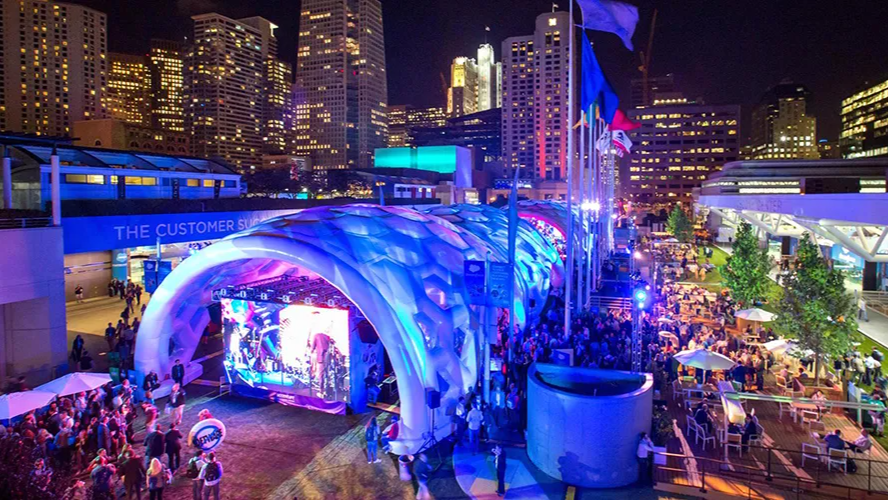
If you looked at the Australian marketing landscape back in 2019, you would have seen an experiential and live events sector at the absolute top of its game. It was a thriving, high-energy market contributing over $35.7 billion in direct economic expenditure. Brands were heavily investing in the physical world because consumers were actively prioritising real-world experiences over material things. Then, almost overnight, the music stopped.  The Dark Days of Covid When the pandemic hit in early 2020, the experiential sector didn't just slow down, it faced a total shutdown. Public health mandates meant that a staggering 96% of all scheduled live events and corporate activations were instantly cancelled or postponed. For the people we worked with in this sector, it was catastrophic. The industry suffered a near 100% loss of immediate revenue over the first year of restrictions. More than 92,000 passionate event, experiential professionals, creatives, and specialists lost their jobs in a matter of months. Marketing budgets rapidly moved online, accelerating a massive digital shift as brands aimed to capture people scrolling in lockdown. For nearly two years, the industry was on life support, leading many to wonder if consumer habits had changed permanently. A Very Crowded Internet As the world reopened, brands poured historic levels of investment into digital channels. But a new problem emerged, digital fatigue and overwhelm. With the sudden explosion of automated, AI-generated content, the internet has become incredibly crowded. The cost to acquire a customer online has skyrocketed, while actual consumer attention spans have plummeted. Digital ads have now started to yield less return because they lack one crucial element, authenticity. The Resurgence of Human Interaction Back to the present day in 2026, where the experiential and events market is relishing in one of the most remarkable industry comebacks in Australian history. The live events and experiential sectors have roared back to reach a massive valuation of AUD $27.7 billion today. The Proof In Is The People 2026 live events are experiencing record breaking numbers... When it comes to in person events today, Australians aren't just showing up, they are breaking all-time attendance records. The Australian Open 2026: The tournament completely shattered its previous attendance milestones, drawing a record-breaking 1.368 million fans to Melbourne Park. Beyond the tennis, brands capitalised heavily with major physical activations, live music events, and pop-up dining footprints that relied entirely on face-to-face consumer engagement. AFL Gather Round 2026: Down in South Australia, the event proved that live sporting culture is a massive driver for the physical economy, welcoming a record 270,018 fans across the weekend. Off-field partner activations saw well over 100,000 people flocking to physical sites like the Macca's Footy Festival at Elder Park. B2B Trade Expos: It isn’t just consumer entertainment seeing a boom. The Australian Automotive Aftermarket Expo drew 15,000 attendees to Melbourne, making it the largest automotive trade event ever held in the Southern Hemisphere. Meanwhile, the national ENTECH Roadshow saw visitor registrations climb by 27% , with exhibitors reporting that physical, face-to-face interaction was the primary driver for closing high-value commercial deals. People Want Real Experiences The commercial hook of experiential marketing today is its complete immunity to digital automation. While software can easily optimise an online ad account, it cannot replicate the tangible elements of human presence. The sector's growth is no longer just about throwing a launch party or sampling, it has matured into a commercial heavyweight. At $27.7 billion, Australia's experiential market size is now nearly as large as the country's entire paid advertising market ($31.1 billion). Recruiting for the Continued Growth of Experiential This incredible comeback story is inspiring to say the least. Experiential is here to stay, back bigger than ever, and we here at iknowho are delighted. Is your team structured to capture the value of the physical economy? Get in touch with the specialist recruitment team at iknowho today to discuss benchmarking your team structure and securing the talent needed to drive your experiential strategy forward.
By Brianna P August 2, 2026
When Marketing Week recently dropped the news that the gender pay gap in the US and UK marketing sectors had stretched to a five-year high of 16.5%, it sent a bit of a collective shiver through us all at iknowho. But rather than looking at these overseas headlines and feeling a sense of doom and gloom, we see them as an incredibly valuable heads-up. It’s a warning signal, and if we are consciously aware of the risks, we can work to sustain gender equality within the marketing and advertising industries as they continue to evolve.  Where the Australian Market Stands Right now, the latest local salary data across SEEK and Glassdoor helps us to understand the stage of the economic cycle we are in. It will be no shock that this year given rising interest rates and additional economic influences, marketing and advertising salaries have largely flatlined. Standard benchmarks for core roles like Digital Marketing Specialists sitting around $90,000–$100,000 and Marketing Managers spanning $110,000–$140,000 are holding steady rather than climbing. In fact, data shows that roughly 40% of local businesses are understandably navigating tight budget constraints this year So while there's still room for improvement, the good news is we have a window now to take action. While pay rises are on hold as the industry recalibrates, it creates the perfect opportunity to review the current metrics and plan for the next phase of growth. The AI Factor: Training For All A major reason for the pay gap resurgence in the US is the rapid, unstructured rollout of AI. Candidates able to execute advanced data, automation, and tech-driven marketing are commanding a premium, often giving candidates an immediate 6% boost to their base salaries. Thats not to say everyone will need to be an AI specialist to advance, but to ensure equality, business owners have an opportunity to be deliberate about how we upskill our teams. Instead of letting tech adoption happen organically in siloes, we can use this moment to democratise education. If we ensure our female mid-weight and senior marketers are given the exact same access, mentorship, time, and encouragement to learn about and feel comfortable with AI strategy, we don't just protect them from wage stagnation, we actively propel them into those high-value, future-proof strategic roles. The Proactive Action Plan for Aussie Leaders Fixing a pay gap doesn't require a radical financial overhaul overnight. It starts with small, highly empathetic, and transparent leadership choices. If you want to ensure your business is maintaining gender pay equality, here is your proactive checklist: Audit the "hidden" pay: WGEA's recent metrics show that base salaries are actually becoming much fairer. The real disparity often hides in discretionary pay, like performance bonuses, allowances, and sign-on perks. Take an evening to map out your bonus structures and ensure they are tied to objective, transparent metrics rather than subjective negotiations. Build the "protected hours" upskilling model: Introduce structured AI and tech training that happens during work hours, rather than expecting employees to figure it out in their spare time. This ensures that team members with caring responsibilities or heavy workloads have equal space to capture that 6% technical market premium. Open the promotion pipeline: Because the external hiring market is moving at a calmer pace, look deeply at your internal talent. Ensure the pool of people being tapped for high-visibility client pitches or digital transformation projects reflects the diverse makeup of your broader team. At iknowho , we genuinely believe that the future of Australian marketing is incredibly bright. By taking the lessons from the US and UK and turning them into proactive internal policies, we can build an industry that doesn't just talk about equality, but actively lives it. If you would like to understand more about how you can build a progressive marketing team, iknowho are always here to share insights and help you benchmark your strategy.
By Brianna P August 2, 2026
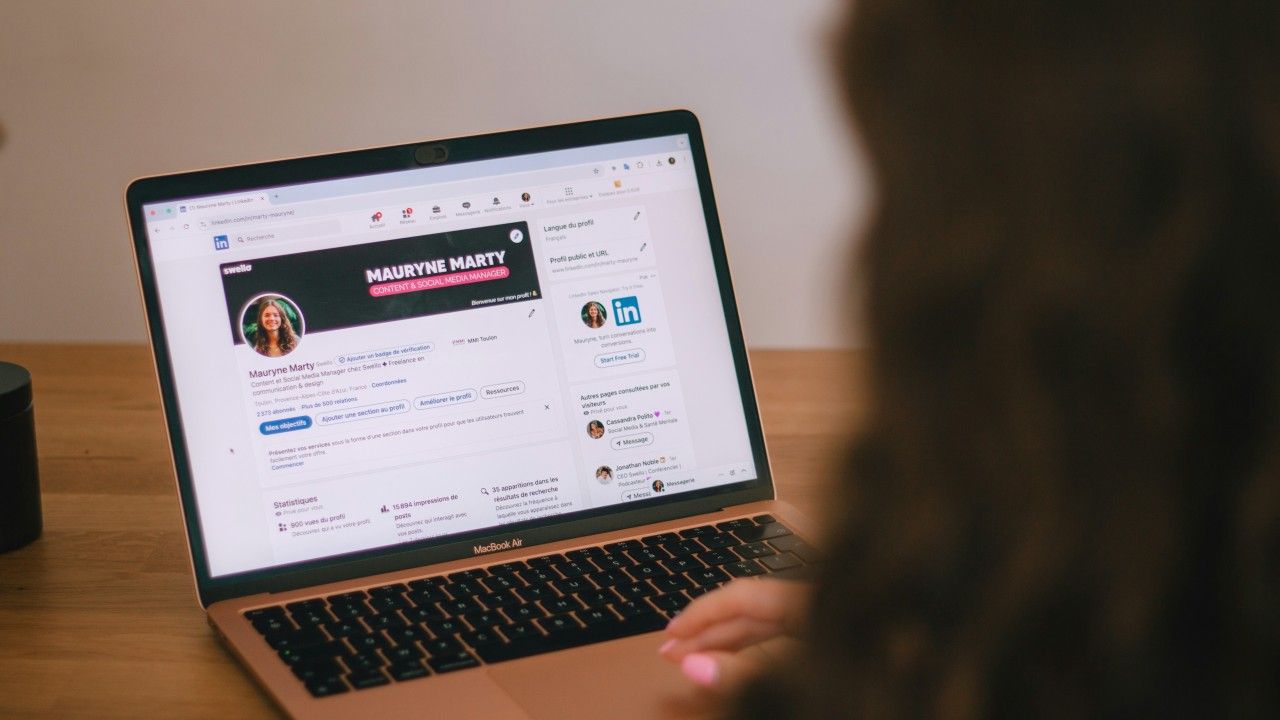
Most marketers know their resume matters, but what about your LinkedIn profile...
more posts