Spotlight on... Rachel Lounds, Certified Life & Mindset Coach at The Poschology Collective

Brooke Cashman • June 28, 2021

We caught up with Rachel Lounds, Certified Life & Mindset Coach at The Poschology Collective, to chat about the work she does with women in the media industry to help them overcome imposter syndrome by building their confidence, changing their mindset, and helping them reach their full potential.


As recruiters, we speak to a lot of candidates experiencing imposter syndrome, particularly if they are returning to work after extended periods of leave or trying to get a promotion or pay rise, so this is a topic very close to our hearts.


Rachel shares with us her own experiences with imposter syndrome and her journey from working in the media industry to finding her place and her passion for helping others as a life and mindset coach. Rachel explains what imposter syndrome is and why some people experience it and gives us her top tips on how you can overcome your own imposter syndrome.


You’ve had a successful career working at some of the top advertising agencies both nationally and in London including Leo Burnett, McCann and BMF. What made you make the move to become a life and mindset coach for women in the media sector and start The Poschology Collective?


After 20 years in advertising agencies, I was losing my passion for the industry. I ended up experiencing anxiety, chronic self-doubt and insomnia knowing that my heart just wasn’t in it the way it used to be. All classic signs that I was burning out.


As a Creative Services Manager, you have to adapt to different types of personalities, people and situations. I wanted to find something that used my vast experience in problem-solving and helping people.


I’ve always had a deep interest in psychology, particularly positive psychology. So, before I left my last role at McCann the plan was, I'll take a little break, study and then I'll get back into work, but I'll try and find something different outside of advertising.


That was when COVID hit, so my plans quickly changed! I thought I might as well use this time to seriously pin down what I wanted my future to look like. And it's probably been the best thing that's happened to me because I finally had time to breathe, think and process.


For years I’d toyed with the idea of becoming a life coach, I thought I’d be good at it and enjoy helping others, but my own self-doubt stopped me. I finally took the plunge, researched some courses and retrained. I also got myself a life coach and realised that this work is EXACTLY aligned with my skill set, what I wanted to be doing and where I want to be taking myself into the future.


I wanted to help other women overcome the negative mindset holding them back so they can become their most empowered selves at work and in life.

I decided to focus on the media sector not only because of my contacts in the industry, but because I know what women really are going through in the workplace. I can understand the problems so it’s easier for me to sit in that space and help.


For those that may not be aware of imposter syndrome, what is it and why does it affect so many women?


Imposter syndrome is that feeling of not knowing what you are doing, that you got to where you are today by pure luck or even by a mistake. That any minute now, your boss or a client could find you out, they will work out that you don't really know what you’re doing. It’s terrifying.

It is estimated that 70% of people will experience at least one episode of
imposter syndrome in their life.


Imposter syndrome is predominantly experienced by women, but not exclusively. I think the reason is that women tend to doubt and question themselves, it’s instilled in society that women are not capable, or they have emotions that prevent them from being strong leaders.


“You're not as good as a man. You'll never be a great leader”. It's just that voice that kind of rolls around in your head on a loop.


There have always been patriarchal reasons to keep women in that place, and because of that continued language throughout history, women have had to fight for their place, particularly in the workforce.


Because of this, instead of celebrating our successes, we downplay our achievements so that we stay using that language and get stuck in that mindset.


Criticism crushes our confidence. It becomes too risky to step up and voice our opinions.


What do you think are the biggest barriers holding women back in their careers?

For me personally, it’s a lack of confidence and fear of failure, and I see this across a lot of my clients as well. There’s a lot of amazing women doing amazing jobs, but lack of confidence holds them back from taking the next step up, no one wants to fail.


When you put yourself forward in any circumstance as a woman, you’re risking being attacked on both professional and personal abilities. Our self-worth is attached to everything we succeed at and achieve.


The result is a lot of women feel stuck.


There is also a fear of success, essentially meaning if we are successful, we’re opening ourselves up to being criticised and judged so success can also be seen as risky.


What are your top pieces of advice for building confidence and overcoming imposter syndrome?

Your tribe is key. Surround yourself with people who support your choices and bring positivity and opportunity to your life. If you have toxic people in your life, you need to start setting boundaries with them so that you can control how they appear in your life.


Re-write the script. Your inner chat fuels your imposter syndrome. Change the language that the little voice on a loop in your own head uses and the way you speak to yourself. Be your own best friend.


Practice gratitude daily. Take the time to reflect on your successes. I think it’s really good to practice gratitude and use positive affirmations to affirm in your mind that you are worthy and capable, you are successful, and that you are enough. This is one of the strongest ways of changing your mindset. Become more self-aware and start believing in yourself.


And of course, if you’re wanting help on your journey, get yourself a coach!


Rachel offers a range of coaching options, from a one-off 1:1 session through to a 12-week program, you find out more about these on her website www.theposchologycollective.com


Rachel also offers free 15-minute coaching calls if you’d like to talk more about your experience with imposter syndrome and find out how she can help you to change your mindset and start achieving your goals. You can book your free call with Rachel here.


Follow The Poschology on Instagram for helpful and informative videos, positive affirmations and inspirational words that we can all benefit from most days! You can connect with Rachel on Instagram here.


Rachel's interview is part of our new 'Spotlight on...' series where we'll be sitting down with people who inspire and excite us with their work, with clients and candidates to find out what exciting projects they're working on in the marketing and advertising industry, and experts in our network who can share their own career advice with candidates. 

We'd love your feedback, if you have any comments, suggestions, or questions you'd like answered, reach out to Brooke - brooke@iknowho.com.au

By Brianna P August 2, 2026
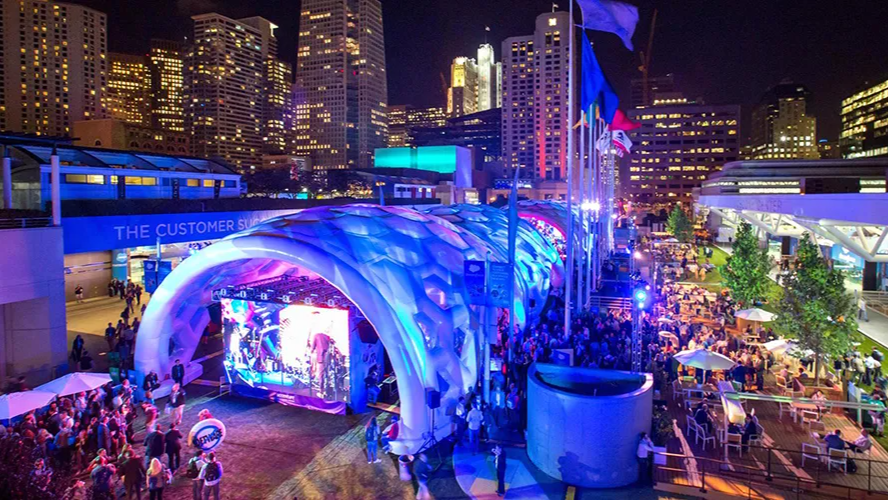
If you looked at the Australian marketing landscape back in 2019, you would have seen an experiential and live events sector at the absolute top of its game. It was a thriving, high-energy market contributing over $35.7 billion in direct economic expenditure. Brands were heavily investing in the physical world because consumers were actively prioritising real-world experiences over material things. Then, almost overnight, the music stopped.  The Dark Days of Covid When the pandemic hit in early 2020, the experiential sector didn't just slow down, it faced a total shutdown. Public health mandates meant that a staggering 96% of all scheduled live events and corporate activations were instantly cancelled or postponed. For the people we worked with in this sector, it was catastrophic. The industry suffered a near 100% loss of immediate revenue over the first year of restrictions. More than 92,000 passionate event, experiential professionals, creatives, and specialists lost their jobs in a matter of months. Marketing budgets rapidly moved online, accelerating a massive digital shift as brands aimed to capture people scrolling in lockdown. For nearly two years, the industry was on life support, leading many to wonder if consumer habits had changed permanently. A Very Crowded Internet As the world reopened, brands poured historic levels of investment into digital channels. But a new problem emerged, digital fatigue and overwhelm. With the sudden explosion of automated, AI-generated content, the internet has become incredibly crowded. The cost to acquire a customer online has skyrocketed, while actual consumer attention spans have plummeted. Digital ads have now started to yield less return because they lack one crucial element, authenticity. The Resurgence of Human Interaction Back to the present day in 2026, where the experiential and events market is relishing in one of the most remarkable industry comebacks in Australian history. The live events and experiential sectors have roared back to reach a massive valuation of AUD $27.7 billion today. The Proof In Is The People 2026 live events are experiencing record breaking numbers... When it comes to in person events today, Australians aren't just showing up, they are breaking all-time attendance records. The Australian Open 2026: The tournament completely shattered its previous attendance milestones, drawing a record-breaking 1.368 million fans to Melbourne Park. Beyond the tennis, brands capitalised heavily with major physical activations, live music events, and pop-up dining footprints that relied entirely on face-to-face consumer engagement. AFL Gather Round 2026: Down in South Australia, the event proved that live sporting culture is a massive driver for the physical economy, welcoming a record 270,018 fans across the weekend. Off-field partner activations saw well over 100,000 people flocking to physical sites like the Macca's Footy Festival at Elder Park. B2B Trade Expos: It isn’t just consumer entertainment seeing a boom. The Australian Automotive Aftermarket Expo drew 15,000 attendees to Melbourne, making it the largest automotive trade event ever held in the Southern Hemisphere. Meanwhile, the national ENTECH Roadshow saw visitor registrations climb by 27% , with exhibitors reporting that physical, face-to-face interaction was the primary driver for closing high-value commercial deals. People Want Real Experiences The commercial hook of experiential marketing today is its complete immunity to digital automation. While software can easily optimise an online ad account, it cannot replicate the tangible elements of human presence. The sector's growth is no longer just about throwing a launch party or sampling, it has matured into a commercial heavyweight. At $27.7 billion, Australia's experiential market size is now nearly as large as the country's entire paid advertising market ($31.1 billion). Recruiting for the Continued Growth of Experiential This incredible comeback story is inspiring to say the least. Experiential is here to stay, back bigger than ever, and we here at iknowho are delighted. Is your team structured to capture the value of the physical economy? Get in touch with the specialist recruitment team at iknowho today to discuss benchmarking your team structure and securing the talent needed to drive your experiential strategy forward.
By Brianna P August 2, 2026
When Marketing Week recently dropped the news that the gender pay gap in the US and UK marketing sectors had stretched to a five-year high of 16.5%, it sent a bit of a collective shiver through us all at iknowho. But rather than looking at these overseas headlines and feeling a sense of doom and gloom, we see them as an incredibly valuable heads-up. It’s a warning signal, and if we are consciously aware of the risks, we can work to sustain gender equality within the marketing and advertising industries as they continue to evolve.  Where the Australian Market Stands Right now, the latest local salary data across SEEK and Glassdoor helps us to understand the stage of the economic cycle we are in. It will be no shock that this year given rising interest rates and additional economic influences, marketing and advertising salaries have largely flatlined. Standard benchmarks for core roles like Digital Marketing Specialists sitting around $90,000–$100,000 and Marketing Managers spanning $110,000–$140,000 are holding steady rather than climbing. In fact, data shows that roughly 40% of local businesses are understandably navigating tight budget constraints this year So while there's still room for improvement, the good news is we have a window now to take action. While pay rises are on hold as the industry recalibrates, it creates the perfect opportunity to review the current metrics and plan for the next phase of growth. The AI Factor: Training For All A major reason for the pay gap resurgence in the US is the rapid, unstructured rollout of AI. Candidates able to execute advanced data, automation, and tech-driven marketing are commanding a premium, often giving candidates an immediate 6% boost to their base salaries. Thats not to say everyone will need to be an AI specialist to advance, but to ensure equality, business owners have an opportunity to be deliberate about how we upskill our teams. Instead of letting tech adoption happen organically in siloes, we can use this moment to democratise education. If we ensure our female mid-weight and senior marketers are given the exact same access, mentorship, time, and encouragement to learn about and feel comfortable with AI strategy, we don't just protect them from wage stagnation, we actively propel them into those high-value, future-proof strategic roles. The Proactive Action Plan for Aussie Leaders Fixing a pay gap doesn't require a radical financial overhaul overnight. It starts with small, highly empathetic, and transparent leadership choices. If you want to ensure your business is maintaining gender pay equality, here is your proactive checklist: Audit the "hidden" pay: WGEA's recent metrics show that base salaries are actually becoming much fairer. The real disparity often hides in discretionary pay, like performance bonuses, allowances, and sign-on perks. Take an evening to map out your bonus structures and ensure they are tied to objective, transparent metrics rather than subjective negotiations. Build the "protected hours" upskilling model: Introduce structured AI and tech training that happens during work hours, rather than expecting employees to figure it out in their spare time. This ensures that team members with caring responsibilities or heavy workloads have equal space to capture that 6% technical market premium. Open the promotion pipeline: Because the external hiring market is moving at a calmer pace, look deeply at your internal talent. Ensure the pool of people being tapped for high-visibility client pitches or digital transformation projects reflects the diverse makeup of your broader team. At iknowho , we genuinely believe that the future of Australian marketing is incredibly bright. By taking the lessons from the US and UK and turning them into proactive internal policies, we can build an industry that doesn't just talk about equality, but actively lives it. If you would like to understand more about how you can build a progressive marketing team, iknowho are always here to share insights and help you benchmark your strategy.
By Brianna P August 2, 2026
Most marketers know their resume matters, but what about your LinkedIn profile...
more posts