The Works, AdNews People & Culture Award Finalist

Helen Evans • June 28, 2018

Early 2018 saw the AdNews People & Culture Award, founded by iknowho. With a shortlist of four finalists, agencies across the country demonstrated their innovative initiatives of putting the people first. As one of this year’s four finalists Jasmine Lansdell, People & Culture Director from The Works says ‘people and culture are our number one priority…the people here are what make the agency great’. Over the coming weeks, we will be speaking with this year’s finalists and winner. 


As a returning finalist, I caught up with Jasmine to speak about The Works’ consecutive nomination.


What made you decide to enter the People & Culture Award again?

We believe that we have a fantastic culture and some of the best talent in the industry, so we enter awards where this will be recognised. When we’re nominated or if we’re lucky enough to win, it’s great recognition for the people that make this happen; the leaders who drive our business and the people who make our culture what it is. We've been lucky enough to have been ranked 14th in the Great Places to Work survey this year, so we must be doing something right. 

It’s all about listening to your people, keeping what works and improving what doesn’t. You have to know that a new initiative is going to stick, so we really champion feedback and trialing new things, this way we know if it works or not. We focus on experience and use our expertise in CX to help us do that, focusing on how we can improve the employee experience and testing different things with our people to see what resonates.

Is flexible working still as important to your employees as it was when you introduced your flexible initiatives? How have these initiatives changed over the years?

Yes, flexible working is part of the modern way of working and is important to all of our people, whether they’re parents or not. These flexible working options, such as 4 day weeks, flexible hours, working from home, have evolved in line with what our people have been asking for and we continually look at new ways to ensure that flexibility is on offer to all of our people. 
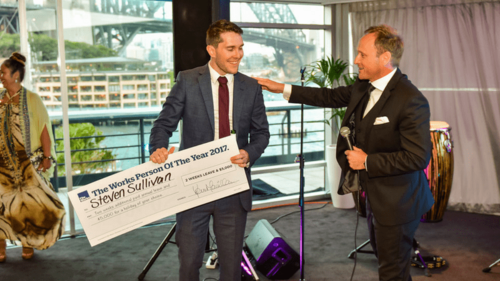
What do you think the industry as a whole could do better when it comes to flexible working?


I think the industry should recognise that people want to work differently now. No longer does the world of work run in the 9-5 weekday, we’re always on and our working environments should reflect this change. I would love to see our industry adapt to this and provide more opportunity for flexible working across all people, not just those with children or care commitments. A more flexible way of looking at work helps provide greater support to our people’s wellbeing, which in turn supports creativity and delivers better outcomes for our clients, which after all is the heart of what we do. 


How do you maintain a positive culture?

Firstly, our leadership team believe in trust and transparency with our people. We have a team of amazingly talented people and we trust them to deliver, giving them ownership of their work but also supporting them along the way. Another thing to keep positivity is to be transparent. Our people will always know what's happening with the business before a client does or they read it in the press, this ensures a feeling of inclusion and unity across the team. The last thing is just to show that you care. One thing that I believe makes our culture is the fact that our people genuinely care about each other. This drives support across all teams as nobody lets anyone else down. The Works is a community and this sense of togetherness makes for a really positive environment. 


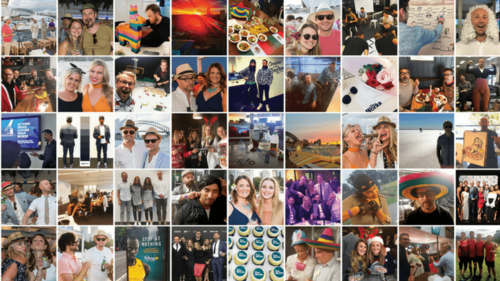
Check out some of The Works social events:
The Works famously provides funds for child care to assist returning parents, are there any other initiatives you have that assists in minimising the loss of talent at the senior end?

For our senior team we offer training opportunities that reflects the growth path of their careers, whether that be leadership training or attending conferences such as SxSW. We also do bi-annual succession planning and provide accelerated progression paths into leadership roles for our top talent. In terms of benefits, we offer additional leave in line with tenure and are open to sabbaticals for those who want to take some time out to travel or focus on a passion project. 


Thank you to The Works for another excellent award entry, check out what was discussed in last years’ interview.

By Brianna P June 24, 2026
As EOFY approaches and budgets come under the microscope, the conversation in Australian agencies and marketing boardrooms are changing. For many, the challenge is no longer simply digital transformation or AI adoption. The focus has shifted to building marketing teams that can drive commercial growth in a more complex and increasingly AI-enabled market. At iknowho , our conversations with senior marketing talent, CMOs, and business leaders across Australia point to a clear shift in both employer expectations and candidate priorities. The marketers in demand in today’s market are commercially fluent, strategically agile, and able to apply technology in ways that genuinely impact business performance. As specialist recruiters with deep marketing industry experience, we are seeing the organisations attracting the strongest talent take a far more strategic approach to workforce planning heading into FY27. The following data aims to provide a snapshot of the conversations we are having with top talent and hiring managers, highlighting the notable trends we are seeing impacting the marketing recruitment industry. In this article we cover the most in demand roles of 2026, the most successful hybrid working strategy (according to the data), how AI literacy is being benchmarked and measured, what a holistic benefits package should compromise of, and finally the marketing and digital skills we see emerging as must haves. Let’s dive in! The Shift from AI Adoption to Commercial Application The AI conversation has matured quickly. In 2024, businesses were focused on experimentation and adoption. In 2026, the focus is far more practical: how AI provides measurable outcomes in efficiency, decision making, customer engagement, and commercial success. Recent Gartner research found CMOs are now allocating an average of 15.3% of marketing budgets toward AI initiatives, yet only 30% believe their organisations are truly ready to scale those capabilities effectively. Gartner 2026 CMO Spend Survey The gap between investment and operational readiness is becoming one of the defining workforce challenges facing marketing leaders heading into FY27. Increasingly, businesses are looking for marketers who can operate confidently across both digital, brand and commercial conversations. What Top Talent Is Looking for in A Job Offer Salary remains important, however it is no longer the sole differentiator for senior candidates. The strongest talent is increasingly assessing organisations holistically, evaluating leadership quality, flexibility, culture, development opportunities, and long-term business direction. Key themes emerging across the market include: Equity & Long-Term Incentives Given the demand for growth marketing specialists, equity participation continues to play a significant role in attracting senior talent. Wellbeing & Sustainable Performance Mental wellbeing support is increasingly viewed as part of core workplace infrastructure rather than an employee perk. Candidates are paying close attention to leadership style, workload sustainability, and psychologically safe environments. Purpose & ESG Alignment There is also growing interest in organisations where ESG commitments are reflected operationally rather than positioned purely as brand messaging. The businesses attracting the strongest candidates are typically those with clear leadership, strong internal culture, and a compelling long-term growth narrative. The Era of “Purposeful Presence” The hybrid debate has largely settled. The focus has now shifted to how organisations create flexibility while maintaining culture, collaboration, and accountability. Across marketing, communications, and technology functions, hybrid work remains the dominant preference, with most professionals favouring some variation of a flexible working model. The “3/2” structure continues to be one of the most preferred formats. Recent Australian workforce research continues to show that approximately 70–80% of professionals favour hybrid working arrangements, while businesses embracing structured hybrid models are reporting stronger engagement and reduced burnout. At the same time, many organisations are moving away from rigid office mandates and toward more intentional workplace structures including collaboration-focused office days, team planning sessions, and greater autonomy around how work is delivered. At iknowho, we describe this shift as Purposeful Presence: creating environments where teams come together with clear intent, rather than attendance for attendance’s sake. Importantly, candidates are increasingly evaluating not just flexibility itself, but the quality of leadership and communication surrounding it. Businesses that approach hybrid strategy reactively are finding it increasingly difficult to retain high-performing talent. Retention Through Learning & Development Retention is becoming more closely tied to development opportunities, particularly as AI and automation continue reshaping the industry. Marketing professionals are actively looking for employers investing in practical capability building across areas such as: AI and marketing automation CRM and lifecycle strategy Data analytics and storytelling Commercial and financial capability Customer growth and retention Short-form learning and practical micro-credentials are becoming increasingly common as businesses look to upskill teams quickly and effectively. The organisations retaining top performers are typically those treating capability development as a long-term business investment rather than a short-term training initiative. The Roles Seeing the Strongest Demand Hiring demand remains strongest for positions operating across marketing, product, customer experience, and automation. The most active areas include: Product Marketing Manager Marketing Automation Manager CRM & Loyalty Specialist Marketing Analyst These roles reflect the broader shift toward measurable performance, retention, and commercially accountable marketing functions. We are also seeing increasing demand for marketers who can operate cross-functionally and influence beyond traditional marketing silos. The Skills Defining the Next Generation of Marketers While technical capability remains important, the market is increasingly rewarding marketers who combine commercial understanding with strategic thinking and human insight. Importantly, the current challenge for many organisations is no longer AI adoption itself, but the internal capability required to operationalise it effectively. Gartner’s latest CMO Spend Survey found that while becoming an AI leader remains a priority for most marketing leaders, only 30% report mature AI readiness capabilities within their organisations. Gartner 2026 CMO Spend Survey The strongest candidates are demonstrating capability across: AI strategy and implementation Data interpretation and decision making Commercial and financial literacy Customer growth and retention strategy Cross-functional communication and influence Increasingly, the marketers creating the greatest impact are those able to combine technology with commercial thinking, leadership capability, and customer understanding. Marketing Leadership Is Also Shifting Movement across senior marketing leadership roles has remained active throughout 2025 and into 2026, particularly across consumer, retail, financial services, and telecommunications sectors. According to Gartner 2026 CMO Spend Survey Marketing budgets remain effectively flat, rising only slightly to 7.8% of company revenue in 2026 from 7.7% in 2025. As businesses operate under increased budget scrutiny, the remit of the modern CMO continues to expand well beyond traditional brand leadership into customer experience, growth strategy, digital transformation, data, and AI integration. As a result, businesses are increasingly seeking marketing leaders who combine commercial capability with cross-functional influence, operational agility, and strategic leadership. In our experience, the organisations securing the strongest leadership talent are those able to articulate not only role scope, but also business vision, growth trajectory, leadership alignment, and cultural maturity. Conclusion EOFY 2026 presents an opportunity for organisations to reassess not only budgets, but capability, culture, leadership, and long-term workforce strategy. The businesses best positioned for FY27 growth are likely to be those investing in:  Commercial marketing capability Strategic AI integration Leadership and retention Flexible, high-performance cultures Ongoing learning and development At iknowho , we work closely with Australia’s leading marketing professionals and employers to understand the workforce trends shaping the next phase of growth. As specialist recruiters with lived marketing industry experience, we believe the role of recruitment has evolved beyond talent acquisition alone. Increasingly, businesses are seeking industry partners who can provide market insight, workforce strategy, leadership advisory, and access to high-performing talent before it reaches the broader market. The organisations that attract and retain the strongest marketing talent over the next 12 months will not simply be hiring faster they will be planning smarter.
By Brianna P June 24, 2026
If you're hiring marketing talent right now or considering your next career move the market can feel contradictory. On one hand, there are fewer marketing roles being advertised than there were during the hiring frenzy of 2022. On the other, employers continue to tell us they're struggling to find the right people. So, what's really happening? Looking at the latest SEEK and LinkedIn data, alongside what we're seeing every day across Australia's marketing, digital and communications landscape, the answer is surprisingly positive: the market isn't contracting, it's recalibrating. We've moved well beyond the hiring peak of May 2022, when marketing job volumes surged by 28.6%. Compared to those unprecedented levels, today's market can feel quieter. However, the reality is that marketing hiring has settled into a more sustainable and deliberate rhythm. SEEK's latest data shows marketing job advertisements softened by 1.7% month-on-month. While any decline can sound concerning in isolation, context matters. Compared to sectors experiencing much steeper contractions, marketing continues to demonstrate resilience and remains one of the more stable professional hiring markets. Why Hiring Still Feels Hard Perhaps the most interesting insight is that while job volumes have moderated, hiring hasn't necessarily become easier. According to LinkedIn's latest research, 66% of recruitment and talent professionals say it has become harder to secure high-quality talent over the past 12 months. Because organisations are no longer hiring for narrow specialisations. They're looking for marketers who can blend creativity with commercial acumen, understand customer behaviour, leverage data effectively and demonstrate measurable business impact. "The brief has become broader, and the expectations higher" At the same time, the candidate experience has changed. With AI-powered tools helping professionals optimise resumes and applications, many candidates appear increasingly similar on paper. The challenge for hiring managers isn't attracting applications it's identifying the people behind them. AI Is Raising The Bar It's impossible to discuss the future of marketing talent without discussing AI. Recent research from Anthropic found that Market Research Analysts and Marketing Specialists rank among the occupations most exposed to AI, with approximately 64% of tasks showing potential for AI augmentation. Activities such as preparing reports, visualising data and translating findings into written summaries are increasingly being supported by AI tools. "Exposure doesn't equal replacement" What we're seeing is AI automating tasks rather than eliminating roles. The technology is helping marketers work faster and more efficiently, while increasing the value of skills that remain uniquely human—strategic thinking, creativity, stakeholder management and commercial judgement. The marketers who will thrive won't be those competing with AI, but those who know how to use it effectively. The best marketers will use AI as a tool, not a crutch. Where We Continue to See Investment Despite economic pressures, several areas of marketing continue to attract significant investment. Growth Marketing The focus has moved beyond channel execution. Businesses are investing in marketers who can connect acquisition, retention and revenue growth, taking a full-funnel view of customer engagement and business performance. Social Media, Content and Creator Partnerships As audiences increasingly value authenticity and connection, brands are continuing to invest in specialists who understand community building, creator ecosystems and platform-first storytelling. While AI can generate content at scale, businesses are increasingly recognising that genuine audience engagement still requires a human touch. As a result, we continue to see strong demand for marketers who can build communities, shape brand narratives and create content that resonates. CRM and Customer Lifecycle Marketing As privacy regulations evolve and third-party data becomes less reliable, first-party customer relationships have become increasingly valuable. CRM specialists remain among the most sought-after marketers, helping businesses drive retention, loyalty and customer lifetime value. Skills Are Becoming More Important Than Titles One of the strongest themes emerging from LinkedIn's 2026 workforce research is the shift towards skills-first hiring. As AI reshapes tasks across many professions, organisations are placing less emphasis on rigid career pathways and traditional job titles, and greater value on adaptability, learning agility and transferable capability. For marketers, this presents a significant opportunity. The professionals standing out in today's market aren't necessarily those with the most linear careers. They're the ones who can demonstrate impact, commercial thinking and the ability to evolve alongside changing customer expectations and emerging technologies. Looking Ahead  The marketing talent market isn't experiencing a downturn as much as a reset. Hiring is more deliberate. Expectations are higher. The skills that organisations value are evolving. But the fundamentals remain strong. For employers, success will come from looking beyond keywords and resumes to identify the capabilities and behaviours that drive performance. For candidates, it's about clearly articulating outcomes, impact and the unique value they bring. Because while technology continues to change how we hire, great careers and great teams are still built by people. Perhaps that's why the most successful hiring decisions still come down to people. In a market increasingly shaped by technology, understanding the person behind the resume may be more important than ever.
How to write your resume
By Brianna P June 15, 2026
How to write your resume so ATS can read it
more posts